#Podcast prospecting: mining guest lists for B2B leads
Copy page
TL;DR: Every podcast guest list is a public record of who a company trusts to represent it in public, and that record updates faster than most CRM data ever will. Podcast prospecting means mining guest appearances, episode transcripts, and listener communities for real buying signals, not pitching yourself as a guest to get exposure. The filter matters more than the volume. Roughly 90% of podcasts stop publishing after episode three, so a show still releasing new episodes past that point is already a stronger signal source than most cold lists a data provider will sell you.
#Table of contents
- Why guest lists are an underused signal source
- What this is not
- The mechanism behind the signal
- Which shows are worth mining
- Extracting signal from an episode without listening to all of it
- From guest name to qualified account
- The research to outreach workflow
- Writing the first email off a podcast signal
- Where this fits inside account tiering
- Listeners are a second prospecting angle
- Tools for a small team versus a larger one
- Where campaign automation fits once you have a list
- Common mistakes that waste the signal
- Measuring whether this is worth the time
- FAQ
- Conclusion
#Why guest lists are an underused signal source
A guest list tells you who a company decided was worth putting in front of an audience.
That is a different kind of data than a title on LinkedIn or a line in a firmographic export.
Someone signed off on that appearance, prepped talking points, and probably cleared it with a comms or marketing lead.
Most prospecting tools skip this entirely because it does not live in a clean database.
It lives scattered across show notes, RSS feeds, and YouTube descriptions, which is exactly why almost nobody mines it systematically.
The people who do get a list nobody else is calling.
#What this is not
This piece is not about pitching yourself as a guest to get your own name on shows.
That is a real, separate channel, and we cover the mechanics of writing that pitch, finding producers, and following up without annoying them in our guide on podcast guest pitching.
Read that piece if your goal is booking yourself as a guest for exposure and authority building.
This piece is about the opposite direction: using who other people put on shows, and what they say once they are there, as a source of prospects and buying signals for your own outbound.
The two channels can run at the same time, but they solve different problems and need separate workflows.
#The mechanism behind the signal
A cold email that references a podcast appearance is not clever because it name drops a show.
It works because it proves the sender did something a data provider cannot automate: they watched or read what the prospect actually said, in their own words, recently.
That is closer to the mechanism behind buying signals in cold email than to generic personalization.
A podcast guest slot is a timestamped, public statement of what someone is thinking about right now.
If a VP of RevOps spends 40 minutes on a show talking about a specific tooling gap, that gap is a live problem, not a guess pulled from a job title.
Compare that to a static firmographic list, where the same VP has looked identical on paper for the past two years.
The podcast appearance is closer to a real job change trigger or a hiring signal in how fresh and specific it is, except almost nobody is mining it at scale yet.
#Which shows are worth mining
Not every podcast is worth the research time.
Most shows launch, publish two or three episodes, and go quiet, which means the guest list on them is a snapshot of who said yes to a friend's new project, not a signal of anything durable.
Roughly 90% of all podcasts stop publishing after episode three, and the average show that does survive still tends to go inactive somewhere around episode 21.
A show still releasing new episodes past that point has already survived the mortality curve that kills almost everything else, which makes its guest list meaningfully more reliable.
Filter for shows with a consistent publishing cadence over at least six months, a guest roster that overlaps with your actual ICP, and episode notes detailed enough to extract real content without listening start to finish.
#A checkmark and cross table for show selection
| Signal | ✓ Worth mining | ✗ Skip |
|---|---|---|
| Publishing history | 6+ months, consistent cadence | Fewer than 10 episodes total |
| Guest fit | Guests match your target titles and industries | Guests are mostly the host's personal network |
| Show notes | Detailed, timestamped, searchable | Thin, generic, no real summary |
| Recency | New episodes in the last 30 days | Last episode over 6 months ago |
| Audience size | Any size, if guest fit is strong | Large audience, weak guest to ICP overlap |
| Transcript availability | Full transcript or auto-captions available | Audio only, no text anywhere |
Audience size is deliberately near the bottom.
A niche 400 listener show in your exact vertical will produce better prospects than a 50,000 listener general business show, because the guest list on the niche show is filtered by the same criteria you are trying to target.
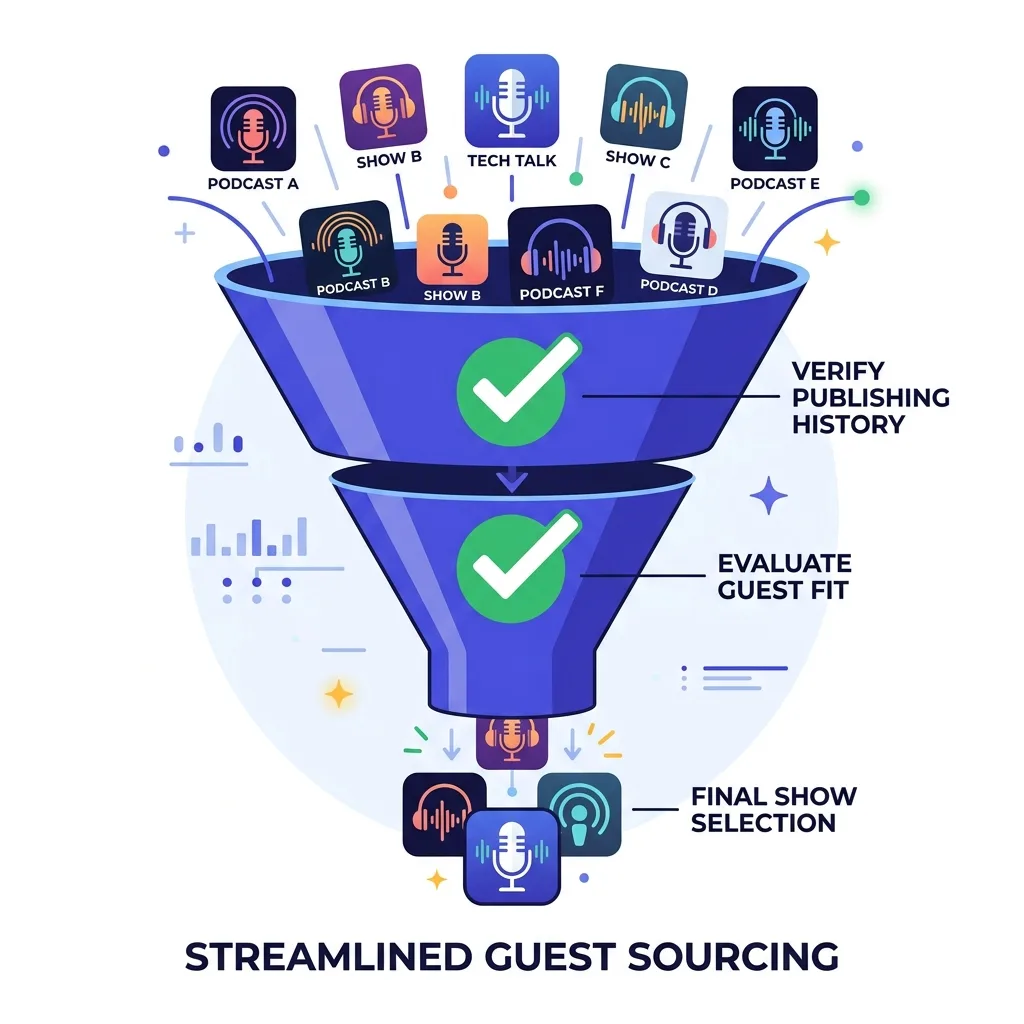 Filtering podcast shows by publishing history and guest fit before mining them for prospects
#Extracting signal from an episode without listening to all of it
Nobody has time to listen to every episode of every relevant show start to finish.
Most platforms auto-generate transcripts now, and reading a transcript at normal reading speed takes a fraction of the time listening does.
Search the transcript for the specific pain points, tools, and decisions the guest mentions, rather than reading it end to end like an article.
Look for three things specifically: a named problem the guest is actively solving, a tool or vendor they mention by name, and any forward-looking statement about a project or initiative.
Those three data points turn a generic guest appearance into something close to a compound buying signal, where more than one independent data point points at the same conclusion.
A guest who mentions both a hiring push and a tooling gap in the same 30 minute conversation is a stronger prospect than one who mentions either alone.
#From guest name to qualified account
A guest's name and title are the starting point, not the finish line.
Confirm they are still at the company the episode names, since podcast episodes can sit online for years after someone has moved on.
Check whether the company matches your ideal customer profile on size, industry, and stage before spending more research time on it.
If the guest has moved to a new company since the episode aired, that job change is its own signal, often a stronger one than the original appearance, since a new leader at a new company frequently gets budget and mandate to fix exactly the kind of problem they were describing on the show.
Cross reference the guest against other people at the same company who might also be reachable, since a single podcast appearance rarely means only one person there is worth contacting.
That is where multithreading a buying committee starts to matter, treating the guest as one entry point into an account rather than the entire target.
#The research to outreach workflow
Each step in that chain is fast on its own.
The value comes from running it consistently across a defined list of shows, not from doing it once as a one-off exercise for a single high-value account.
#Writing the first email off a podcast signal
Reference the specific claim, not the fact that they were on a podcast.
"I heard your episode on the Ops Weekly show" reads like flattery and gets deleted.
"You mentioned spending three months evaluating enrichment vendors before landing on one that still misses 20% of your target list" reads like someone paying attention.
Keep the reference to one sentence, then move directly to why you are writing, the same discipline that applies to any strong cold email opening line.
Do not quote the guest at length or summarize the whole episode back to them.
That reads as padding the email to sound more researched than it needed to be, and it slows the reader down before they reach the actual point.
#Where this fits inside account tiering
Podcast research is expensive in a way mass list building is not, since it takes real reading and verification time per account.
That makes it a poor fit for a bottom tier list where volume matters more than depth, and a strong fit for accounts that already deserve deeper research.
Reserve podcast mining for tier one and tier two accounts where a stronger, more specific opener is worth the extra ten or fifteen minutes.
Running it against a list of a thousand cold accounts wastes the format's real advantage, which is depth, not reach.
#Listeners are a second prospecting angle
Guests are the obvious source, but a show's listener community is a second one that gets ignored almost entirely.
Shows with an active Slack, Discord, or LinkedIn group attached often have members posting under their real names and companies, discussing the exact problems the show covers.
That community is closer to a warm audience than a cold list, since membership itself is a filter for genuine interest in the topic.
Treat outreach into that space carefully and transparently rather than as a data source to scrape silently, the same caution that applies to selling inside Slack and Discord groups more broadly.
A comment or a genuine contribution in the community, followed later by a direct and clearly-labeled outreach message, holds up far better than treating the group as an anonymous list to extract and blast.
#Tools for a small team versus a larger one
A one or two person outbound motion can run this entirely by hand.
Subscribe to RSS feeds for ten to fifteen shows in your niche, skim new episode notes weekly, and keep a simple spreadsheet of guest name, company, claim, and status.
A larger team running this at more volume benefits from podcast search tools that index transcripts across large catalogs, letting a rep search by keyword or company name instead of checking shows one at a time.
Either way, the bottleneck is the same: someone has to actually read the extracted claim and decide whether it is a real signal before it goes into outreach.
No tool replaces that judgment call, the same way waterfall enrichment still needs a human decision about which fields are trustworthy enough to act on.
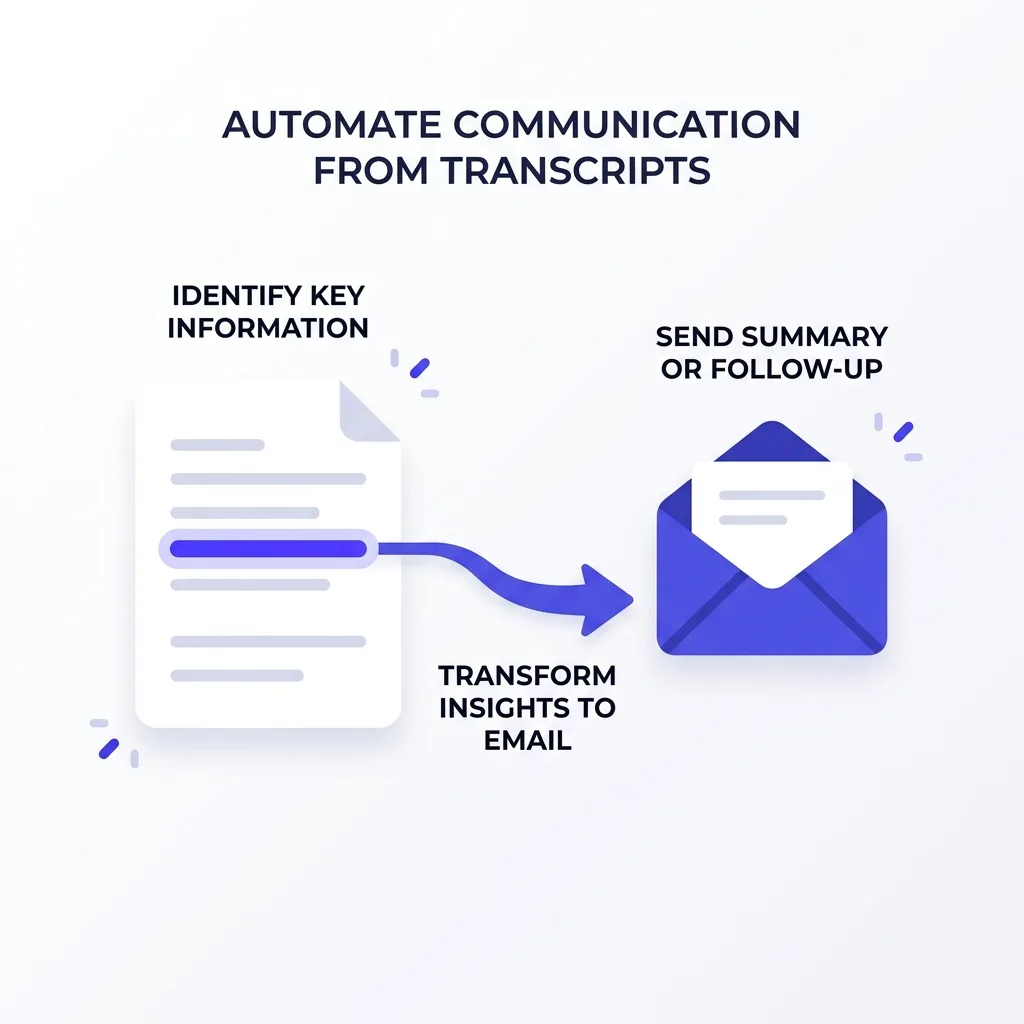 Turning a verified podcast signal into a sequenced first touch email
#Where campaign automation fits once you have a list
Once a podcast-sourced list exists, the sequencing and drafting work is the same as any other signal-based campaign.
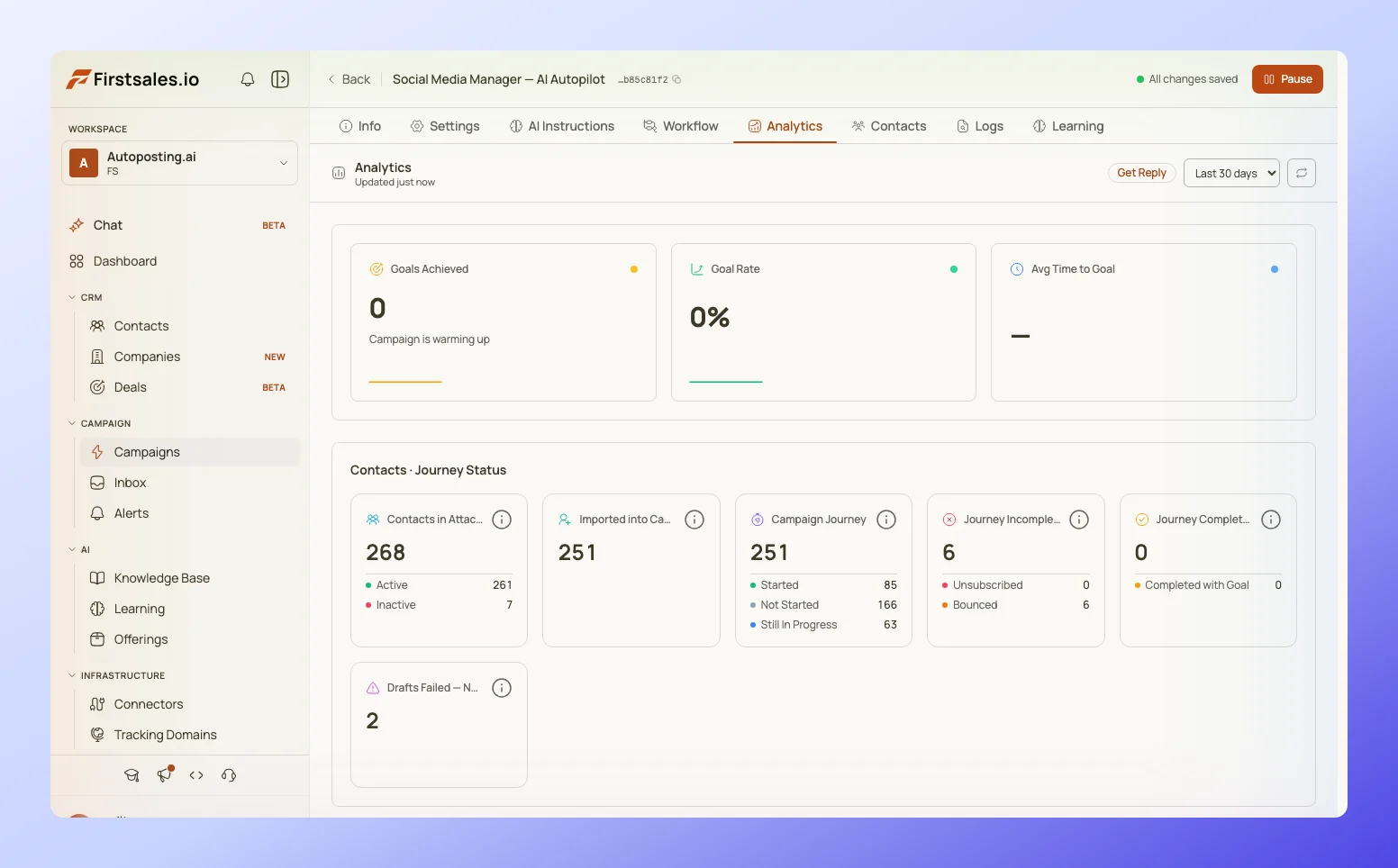 FirstSales campaign sequence screen showing a multi step outreach cadence built from researched signals
Teams using FirstSales to draft the first email from a researched signal, with a human approving the send before it leaves, find this is where the format earns its keep.
The research step stays manual, since judging whether a claim from a transcript is a real signal is not something worth automating away.
The drafting and sequencing step is where automation actually saves time, turning a verified signal into a sequenced first touch without a rep retyping the same email structure fifteen times a week.
That split, manual judgment on the signal, automated drafting on the send, mirrors how most AI-assisted outbound works best in practice.
#Common mistakes that waste the signal
The first mistake is treating every guest as a warm lead regardless of fit.
A guest can be an entertaining interview and still work at a company nowhere near your ICP, and chasing every name on a roster wastes the entire advantage of filtering upfront.
The second mistake is quoting the episode too literally in the email, which reads as either flattery or surveillance rather than genuine attention.
The third mistake is mining a show once and never returning to it, when the actual value comes from checking a defined list of shows on a cadence as new episodes release.
The fourth mistake is skipping verification that the guest still works where the episode says they do, since podcast archives do not update when someone changes jobs.
#Measuring whether this is worth the time
Track reply rate on podcast-sourced opens separately from the rest of your pipeline, the same way you would isolate any new signal-based prospecting channel before scaling it.
Compare the research time per prospect against the reply lift, since this format only pays off if the extra ten to fifteen minutes per account produces a meaningfully higher response than a generic list send.
Give it a full quarter before judging results, since the show list itself needs a few cycles to prove which shows are actually producing usable signal versus noise.
If a specific show consistently produces qualified leads, treat it as a standing source and check it weekly rather than rediscovering it each time.
#FAQ
#What is podcast prospecting?
Podcast prospecting means using podcast guest appearances, episode content, and listener communities as a source of B2B leads and buying signals, separate from pitching yourself as a guest.
#Is this the same as podcast guest pitching?
No. Guest pitching is about getting yourself booked as a guest for exposure. Podcast prospecting works in the other direction, mining who other companies put on shows as a signal source. See our guide on podcast guest pitching for that separate channel.
#How do I find shows worth mining for my industry?
Search for shows covering your specific niche rather than broad business categories, then filter for at least six months of consistent publishing history and guests that match your target titles.
#Why does episode survival matter for signal quality?
Roughly 90% of podcasts stop publishing after episode three. A show still releasing episodes past that point has already survived the mortality curve that kills most shows, making its guest list more reliable.
#Do I need to listen to full episodes to extract signal?
No. Reading a transcript or detailed show notes is far faster and lets you search for specific pain points, tools, and initiatives instead of listening passively.
#What should I look for in a transcript?
A named problem the guest is actively solving, a specific tool or vendor mentioned by name, and any forward-looking statement about a project or initiative.
#How do I verify a guest still works at the company from the episode?
Check the guest's current profile before researching further. Episodes can stay online for years after someone has changed roles, and an outdated reference undercuts the entire pitch.
#What if the guest has moved to a new company?
Treat that job change as its own signal, often stronger than the original appearance, since new leaders frequently get budget and mandate to fix the exact problem they described on the show.
#How specific should the podcast reference be in my email?
Reference the exact claim the guest made, not the fact that they appeared on a show. One sentence is enough before moving to the actual point of the email.
#Should podcast prospecting apply to my whole prospect list?
No. It is research-intensive per account, so reserve it for higher tier accounts where the extra time is worth it, not a bottom tier list built for volume. See our breakdown of account tiering for outbound.
#Can I use a show's listener community as a lead source too?
Yes, carefully. Active Slack, Discord, or LinkedIn communities attached to a show often have members discussing the exact problems the show covers, but treat outreach there transparently rather than as a silent scraping target.
#What tools help with podcast prospecting at scale?
Podcast search platforms that index transcripts across large catalogs let a rep search by keyword or company instead of checking shows one at a time. A small team can run this manually with RSS feeds and a spreadsheet.
#Does this replace other signal-based prospecting methods?
No. It is one input alongside others like hiring signals, funding signals, and job changes. See our overview of buying signals for cold email for how these combine.
#How do I know if a company from a podcast episode fits my ICP?
Check size, industry, and stage against your ideal customer profile before investing more research time, the same filter you would apply to any other sourced account.
#Should I contact only the guest, or other people at the company too?
Map other reachable contacts at the account once you have verified the guest and the company fit. A single appearance is an entry point into an account, not the entire target. See our guide on multithreading a buying committee.
#What is the biggest mistake teams make with podcast prospecting?
Treating every guest as a warm lead regardless of fit. A guest can be a great interview and still work at a company nowhere near your ICP.
#How long should I test podcast prospecting before deciding if it works?
A full quarter. The show list itself needs a few cycles before you know which shows reliably produce usable signal.
#Can AI tools automate the transcript research step?
They can speed up search and summarization, but a human still needs to judge whether an extracted claim is a real signal worth acting on before it becomes outreach.
#Does podcast prospecting work for small niche markets?
It often works better there, since a niche show's guest list is already filtered by the same criteria a small TAM outbound motion needs.
#How does this compare to warm intro sourcing?
They share a similar logic: using an existing relationship or public signal instead of a cold list. See our piece on warm intro pipeline engineering for the adjacent channel.
#Conclusion
Podcast prospecting works because a guest slot is a public, timestamped record of what a real person at a real company is thinking about right now.
That is rarer than it sounds, and almost nobody is systematically mining it.
The filter matters more than the volume: skip shows that never survived past a handful of episodes, and skip guests whose companies do not fit your ICP regardless of how good the interview was.
Extract the specific claim from a transcript, verify the guest is still there, and write an opener that references the claim in one sentence before getting to the point.
Reserve the format for accounts worth the research time, not a mass list, and give the show list a full quarter to prove which sources actually produce replies.
The research step stays manual by design.
Once a real signal exists, sequencing and drafting the first email is where a tool like FirstSales saves the time that lets a small team keep doing this kind of research consistently instead of abandoning it after the first busy week.
The channel will get more crowded as more teams catch on.
The teams mining it now, while most guest lists still sit unread outside the podcast's own audience, get the cleanest version of the signal before it gets noisy.