Pular para o conteúdo
NovoVeja como

Agende reuniões: conecte um calendário a uma campanha

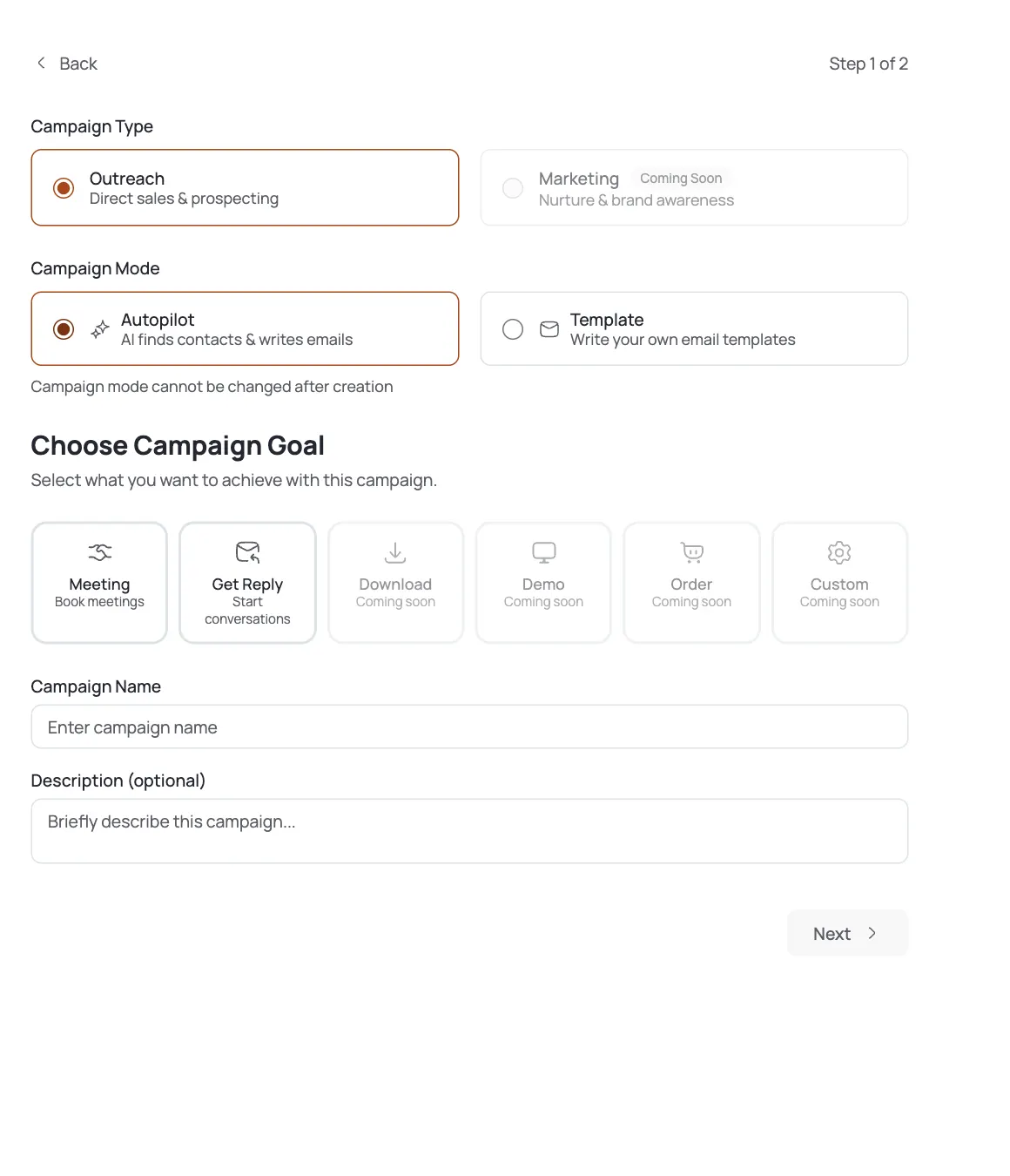
Defina o objetivo de uma campanha como Meeting e anexe um calendário Google ou Outlook para que a IA possa oferecer horários reais de agendamento.

  1. Por que Meeting e um calendário andam juntos

    O objetivo Meeting faz a IA oferecer para marcar um horário com os prospects, e isso só funciona se ela puder puxar disponibilidade real de um calendário conectado.

  2. Defina o objetivo da campanha como Meeting

    Em campaign settings, defina o Goal da campanha como Meeting ("Book meetings with prospects").

  3. Entenda o que o objetivo faz

    O objetivo da campanha determina qual call-to-action é incluído nos e-mails redigidos. Altere-o a qualquer momento em campaign settings.

  4. Encontre o seletor de calendário obrigatório

    Na aba Goal do drafter (ou na seção Calendar das configurações), encontre o seletor rotulado "Available calendars for booking" / "Calendars for meeting booking": ele só aparece para o objetivo Meeting, e é obrigatório.
    Encontre o seletor de calendário obrigatório
  5. Conecte um calendário se ainda não tiver um

    Se nenhum calendário estiver conectado ainda, clique em Add calendar / Connect a calendar e autentique via OAuth do Google ou Outlook.

  6. Marque os calendários que a IA pode oferecer

    Selecione pelo menos um calendário no seletor: isso é obrigatório para uma campanha Meeting. Você pode marcar mais de um se as reuniões puderem cair nas agendas de pessoas diferentes.

  7. Salve, teste e lance

    Salve suas alterações, envie um e-mail de teste e lance a campanha. As ofertas de agendamento nos seus e-mails redigidos agora referenciam o(s) calendário(s) que você anexou.

Dicas de especialista

  • Conecte o calendário antes de definir o objetivo

    Assim o seletor obrigatório já terá algo para selecionar no momento em que você mudar o objetivo para Meeting.

  • Anexe só os calendários que você está confortável em expor

    A IA pode oferecer horários de qualquer calendário que você marcar, então anexe apenas a disponibilidade que você quer compartilhar.

  • Trocar de objetivo esconde o seletor, não a conexão

    A exigência de calendário só se aplica enquanto o objetivo é Meeting: trocar de objetivo esconde o seletor, mas não desconecta nada.

  • Vários calendários são suportados

    Útil quando uma reunião pode cair na agenda de mais de um colega: marque todos que se aplicarem.

Perguntas frequentes

O que o objetivo Meeting faz?

Ele define o call-to-action nos e-mails redigidos para agendar uma reunião com o prospect.

Eu preciso conectar um calendário?

Sim: um calendário é obrigatório para qualquer campanha que use o objetivo Meeting.

Quais calendários são suportados?

Google e Outlook, conectados via OAuth.

Onde eu defino o objetivo?

Em campaign settings.

Onde eu anexo o calendário?

Na aba Goal do drafter ou na seção Calendar das configurações: ambos mostram o mesmo seletor obrigatório quando o objetivo é Meeting.

Posso anexar mais de um calendário?

Sim: marque quantos se aplicarem.

Como eu efetivamente conecto um novo calendário?

Clique em Add calendar / Connect a calendar e complete o fluxo OAuth do Google ou Outlook. Veja o tutorial de conexão de calendário para o passo a passo completo.

Campanhas

Prospecção que continua quando você desconecta.Leads, emails, follow-ups e respostas, resolvidos.

Conecte caixas ilimitadas e deixe os agentes de IA encontrarem leads, escreverem cada email e fazerem follow-up. Ou envie seus próprios modelos no modo manual. A partir de $29/mês.

$1 por 3 dias · Cancele quando quiser · Sem contrato

Instalar com IA

Seu agente de código configura a CLI e as skills do FirstSales para você.

Prompt para Claude Code

I'm setting up FirstSales (https://firstsales.io), an AI outbound sales platform: campaigns, contacts, a reply inbox, deliverability and lead signals. Help me get my workspace sending real, good emails end to end, from Claude Code.

Read these first so you know how FirstSales works:
- Developer docs and API: https://developer.firstsales.io
- CLI: https://www.npmjs.com/package/@firstsales.io/cli
- Skills for coding agents: https://github.com/firstsalesio/firstsales-skills (read README.md and GUIDE.md)

Setup
1. Install the CLI: npm install -g @firstsales.io/cli
2. Install the FirstSales skills:
   claude plugin marketplace add firstsalesio/firstsales-skills
   claude plugin install firstsales@firstsales
3. Ask me if I already have a FirstSales account. If not, send me to https://app.firstsales.io to sign up.
4. Ask me to create an API key under Settings → API → API Keys, with only the scopes we need.
   Never ask me to paste the key into this chat. Tell me to run this in my own terminal, so the key stays hidden:
   read -rs FS_KEY && firstsales auth login --api-key "$FS_KEY"; unset FS_KEY
5. Run `firstsales whoami` and tell me which workspace and organisation we are connected to.

Then ask me about my business: what I sell, who I sell to (roles, company size, countries), my best customers, and what I use today for outbound (tools, lists, mailboxes). Walk me through:
1. Teaching FirstSales my business: website, offer, proof points and case studies in the knowledge base, so the AI writes like someone who knows the product.
2. Connecting my sending mailboxes and checking my sending domain: SPF, DKIM, DMARC and warm-up. If anything is unhealthy, tell me the exact DNS record to add.
3. Bringing in contacts: import my CSV or CRM export into a clean list, remove duplicates and bad emails, and block domains I must never email (customers, competitors, my own).
4. Building my first campaign: the right list, senders, steps and timing. Write the sequence with me, show me the drafts, and do not launch until I say yes.
5. Setting up Signals if it fits: find people engaging with LinkedIn posts about topics my buyers care about, and turn them into leads.
6. Inviting my team and giving each person the right access.

Once campaigns run, show me how to work the reply inbox from here: which replies need an answer, draft responses in my voice, and move good conversations into deals. If I use Cal.com, connect it so follow-ups can offer my booking link (not the first email).

Throughout, as you learn about my business, proactively suggest and help create:
- Reply templates for the questions and objections my prospects are likely to raise, based on my product, site and codebase if you can see them.
- Campaign ideas and segments worth testing, with the reason for each.

Safety rules:
- Show every change as a dry run (--dry-run) first and wait for my yes. Never send emails, launch campaigns or delete anything without my yes.
- Tell me before anything that spends credits, and how many.

Be opinionated. If the docs give a sensible default, just use it. Don't make me choose between five options.