Saltar al contenido
NuevoVer cómo

Agenda reuniones: conecta un calendario a una campaña

Configura el objetivo de una campaña como Meeting y adjunta un calendario de Google u Outlook para que la IA pueda ofrecer horarios reales de agendamiento.

  1. Por qué Meeting y un calendario van juntos

    El objetivo Meeting hace que la IA ofrezca agendar tiempo con los prospectos, y eso solo funciona si puede obtener disponibilidad real de un calendario conectado.

  2. Establece el objetivo de la campaña en Meeting

    En campaign settings, establece el Goal de la campaña en Meeting ("Book meetings with prospects").

  3. Comprende qué hace el objetivo

    El objetivo de la campaña determina qué llamado a la acción se incluye en los correos redactados. Cámbialo en cualquier momento en campaign settings.

  4. Encuentra el selector de calendario requerido

    En la pestaña Goal del drafter (o la sección Calendar de settings), busca el selector etiquetado "Available calendars for booking" / "Calendars for meeting booking": solo aparece para el objetivo Meeting, y es obligatorio.
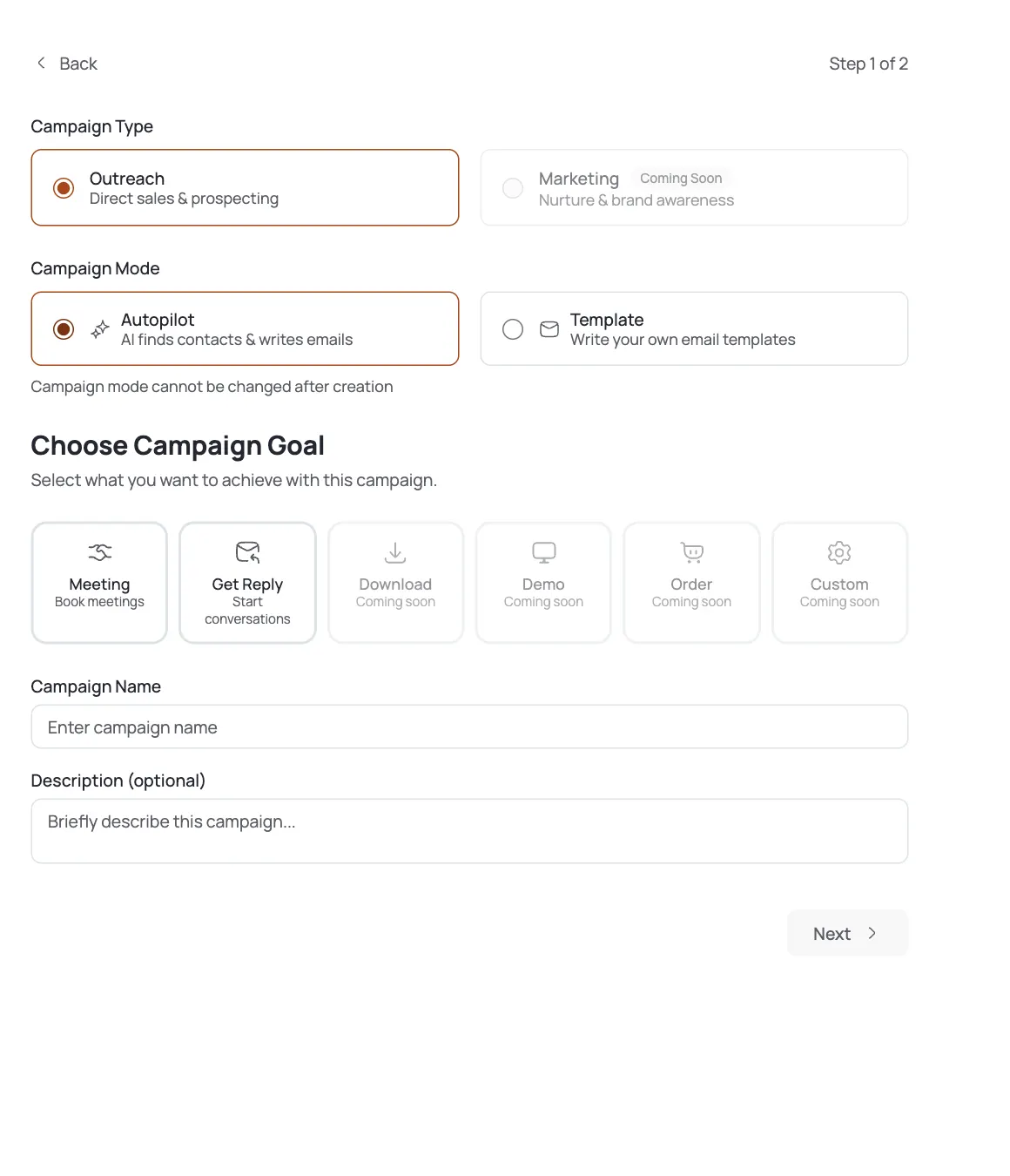
    Encuentra el selector de calendario requerido
  5. Conecta un calendario si no tienes uno

    Si aún no hay un calendario conectado, haz clic en Add calendar / Connect a calendar y autentícate mediante OAuth de Google u Outlook.

  6. Marca los calendarios que la IA puede ofrecer

    Selecciona al menos un calendario en el selector: es obligatorio para una campaña Meeting. Puedes marcar más de uno si las reuniones podrían caer en la agenda de distintas personas.

  7. Guarda, prueba y lanza

    Guarda tus cambios, envía un correo de prueba y lanza. Las ofertas de agendado en tus correos redactados ahora hacen referencia al/los calendario(s) que adjuntaste.

Consejos de experto

  • Conecta el calendario antes de establecer el objetivo

    De esa forma el selector obligatorio ya tiene algo para seleccionar en el momento en que cambies el objetivo a Meeting.

  • Adjunta solo los calendarios que te sientas cómodo exponiendo

    La IA puede ofrecer horarios de cada calendario que marques, así que adjunta solo la disponibilidad que estés dispuesto a compartir.

  • Cambiar de objetivo oculta el selector, no la conexión

    El requisito de calendario solo aplica mientras el objetivo es Meeting: cambiar a otro oculta el selector pero no desconecta nada.

  • Se admiten varios calendarios

    Útil cuando una reunión podría caer en la agenda de más de un compañero de equipo: marca todos los que apliquen.

Preguntas frecuentes

¿Qué hace el objetivo Meeting?

Establece el llamado a la acción en los correos redactados hacia agendar una reunión con el prospecto.

¿Tengo que conectar un calendario?

Sí: se requiere un calendario para cualquier campaña que use el objetivo Meeting.

¿Qué calendarios son compatibles?

Google y Outlook, conectados vía OAuth.

¿Dónde establezco el objetivo?

En campaign settings.

¿Dónde adjunto el calendario?

Ya sea en la pestaña Goal del drafter o en la sección Calendar de settings: ambas muestran el mismo selector obligatorio cuando el objetivo es Meeting.

¿Puedo adjuntar más de un calendario?

Sí: marca tantos como apliquen.

¿Cómo conecto realmente un calendario nuevo?

Haz clic en Add calendar / Connect a calendar y completa el flujo OAuth de Google u Outlook. Consulta el tutorial de conexión de calendario para el recorrido completo.

Campañas

Prospección que sigue cuando te desconectas.Leads, emails, seguimientos y respuestas, resueltos.

Conecta buzones ilimitados y deja que los agentes de IA busquen leads, escriban cada email y hagan seguimiento. O envía tus propias plantillas en modo manual. Desde $29/mes.

$1 por 3 días · Cancela cuando quieras · Sin contrato

Instalar con IA

Tu agente de código configura la CLI y las skills de FirstSales por ti.

Prompt para Claude Code

I'm setting up FirstSales (https://firstsales.io), an AI outbound sales platform: campaigns, contacts, a reply inbox, deliverability and lead signals. Help me get my workspace sending real, good emails end to end, from Claude Code.

Read these first so you know how FirstSales works:
- Developer docs and API: https://developer.firstsales.io
- CLI: https://www.npmjs.com/package/@firstsales.io/cli
- Skills for coding agents: https://github.com/firstsalesio/firstsales-skills (read README.md and GUIDE.md)

Setup
1. Install the CLI: npm install -g @firstsales.io/cli
2. Install the FirstSales skills:
   claude plugin marketplace add firstsalesio/firstsales-skills
   claude plugin install firstsales@firstsales
3. Ask me if I already have a FirstSales account. If not, send me to https://app.firstsales.io to sign up.
4. Ask me to create an API key under Settings → API → API Keys, with only the scopes we need.
   Never ask me to paste the key into this chat. Tell me to run this in my own terminal, so the key stays hidden:
   read -rs FS_KEY && firstsales auth login --api-key "$FS_KEY"; unset FS_KEY
5. Run `firstsales whoami` and tell me which workspace and organisation we are connected to.

Then ask me about my business: what I sell, who I sell to (roles, company size, countries), my best customers, and what I use today for outbound (tools, lists, mailboxes). Walk me through:
1. Teaching FirstSales my business: website, offer, proof points and case studies in the knowledge base, so the AI writes like someone who knows the product.
2. Connecting my sending mailboxes and checking my sending domain: SPF, DKIM, DMARC and warm-up. If anything is unhealthy, tell me the exact DNS record to add.
3. Bringing in contacts: import my CSV or CRM export into a clean list, remove duplicates and bad emails, and block domains I must never email (customers, competitors, my own).
4. Building my first campaign: the right list, senders, steps and timing. Write the sequence with me, show me the drafts, and do not launch until I say yes.
5. Setting up Signals if it fits: find people engaging with LinkedIn posts about topics my buyers care about, and turn them into leads.
6. Inviting my team and giving each person the right access.

Once campaigns run, show me how to work the reply inbox from here: which replies need an answer, draft responses in my voice, and move good conversations into deals. If I use Cal.com, connect it so follow-ups can offer my booking link (not the first email).

Throughout, as you learn about my business, proactively suggest and help create:
- Reply templates for the questions and objections my prospects are likely to raise, based on my product, site and codebase if you can see them.
- Campaign ideas and segments worth testing, with the reason for each.

Safety rules:
- Show every change as a dry run (--dry-run) first and wait for my yes. Never send emails, launch campaigns or delete anything without my yes.
- Tell me before anything that spends credits, and how many.

Be opinionated. If the docs give a sensible default, just use it. Don't make me choose between five options.