TL;DR: Creator and newsletter collab outreach fails for the same reason most cold email fails: senders pitch a generic ask instead of a specific, provable fit. Newsletter sponsorships now command $40 to $120 CPMs against $8 to $22 for typical social content, so the money is real, but creators get 30 to 50 sponsorship pitches a week and skim for one thing: does this sender actually read my work. This guide covers the research steps, pitch structure, pricing conversation, and follow-up cadence that separate a booked collab from a deleted email.
#Why creator outreach is not the same game as B2B cold email
A B2B buyer wants a problem solved.
A creator wants their audience protected.
Every newsletter operator and podcast host has spent months, sometimes years, building trust with a list of subscribers who open their emails because the content has been consistently good.
A bad sponsor pitch does not just get deleted. It signals that the sender did not bother to understand what the creator has built.
That single distinction changes the entire structure of the pitch.
Cold email personalization at scale usually means merge tags and firmographic filters.
Creator personalization means proving you have actually read three of their recent issues and can name what worked.
Vague enthusiasm ("I love your newsletter!") reads as a template, because it is one.
Specific enthusiasm ("Your July 14 issue on churn cohorts got 340 replies, more than double your average") reads as evidence you did the work.
#The research checklist before you write one word
Before drafting anything, pull five data points on the creator or newsletter.
Subscriber count and open rate, if public (many newsletters publish media kits with this data).
Recent sponsor history, found by scrolling the last 8 to 10 issues for "sponsored by" or "brought to you by" lines.
Content cadence and format, because a weekly roundup takes a different pitch than a deep essay newsletter.
Audience overlap with your actual customer base, not just topical adjacency.
One specific piece of content you can reference by name and date.
"The difference between a generic blast and a targeted, personalized approach can result in a six-fold difference in reply rates," according to Podchaser's 2026 pitching data on creator and podcast outreach.
That six-fold gap is not abstract.
It is the gap between a pitch that gets a "thanks, pass" and one that gets a media kit reply within 24 hours.
Skip the research and you are sending a form letter with a name swapped in, and creators can tell within one sentence.
#Newsletter sponsorship math in 2026
The creator economy crossed roughly $250 billion in estimated 2026 value, with some projections putting it near $500 billion by 2030.
Inside that market, newsletter sponsorships carry a pricing premium most senders underestimate.
Thought leadership and B2B newsletter placements run $40 to $120 CPM, compared to $8 to $22 CPM for typical consumer social content.
That premium exists because newsletter audiences are opted in, engaged, and often professionally relevant in a way a scroll-past Instagram ad is not.
For a founder or marketer reaching out cold, that means two things.
First, do not lowball a creator with a media kit that shows real engagement, because they know their rate card.
Second, do not assume a small list is a bad list.
A 4,000-subscriber newsletter for supply chain operations directors can outperform a 40,000-subscriber general marketing list for a niche B2B offer.
Ideal customer profile work applies here just as much as it does to prospect lists. Match the audience, not the vanity number.
graph TD
    A[Identify target newsletters] --> B[Pull subscriber count + past sponsors]
    B --> C{Audience fits ICP?}
    C -->|No| D[Skip, move to next creator]
    C -->|Yes| E[Read 3+ recent issues]
    E --> F[Draft specific pitch with named reference]
    F --> G[Send with clear ask + budget range]
    G --> H{Reply?}
    H -->|No, 4 days| I[One follow-up, new angle]
    H -->|Yes| J[Negotiate format + placement]
    I --> H
    J --> K[Confirm date, deliverables, payment terms]
#The pitch structure that gets opened and answered
Open with the specific reference, not your company.
State clearly you are pitching a paid sponsorship or collab, not asking for a favor.
Name the format you want (dedicated send, classifieds slot, co-written piece, podcast interview) in one line.
Give a rough budget range if you have one, because creators waste less time when the money question is answered upfront.
Close with a real next step, not "let me know your thoughts."
A working template:
"Hi [name], your [date] issue on [specific topic] was the clearest breakdown of [subject] I've read this year. We're looking to sponsor 1-2 newsletters in the [niche] space for a dedicated send, budget around $[X]-$[Y]. Do you have availability in [month] and a media kit you can share?"
That is five sentences.
It respects the reader's time while giving them everything needed to say yes or pass.
Compare that to the far more common approach: three paragraphs about the company's mission, a vague "we'd love to explore a partnership," and no mention of money, format, or timing.
The one-line cold emails principle applies here in spirit even if the format runs slightly longer: brevity signals respect for the reader's time.
#Pricing the ask: flat fee, revenue share, or product trade
Three structures dominate creator collabs, and each fits a different stage of relationship.
Flat fee works best for a first collaboration, because it is simple and low-risk for both sides.
Revenue share (affiliate link, promo code) fits recurring partnerships once trust and conversion data exist.
Product trade (free access, credits) only works for early-stage creators building an audience, and most established newsletter operators will decline it outright.
A founder pitching a 50,000-subscriber B2B newsletter with a "we'll give you free credits" offer is signaling they either do not understand the creator's business model or are not serious about the spend.
If budget is genuinely tight, say so directly and ask about smaller formats: a classifieds line, a shoutout in the sign-off, a co-branded resource link.
Most creators would rather do a small paid slot than a large unpaid one.
#Podcast crossover: when a newsletter also runs a show
 Podcast crossover: when a newsletter also runs a show
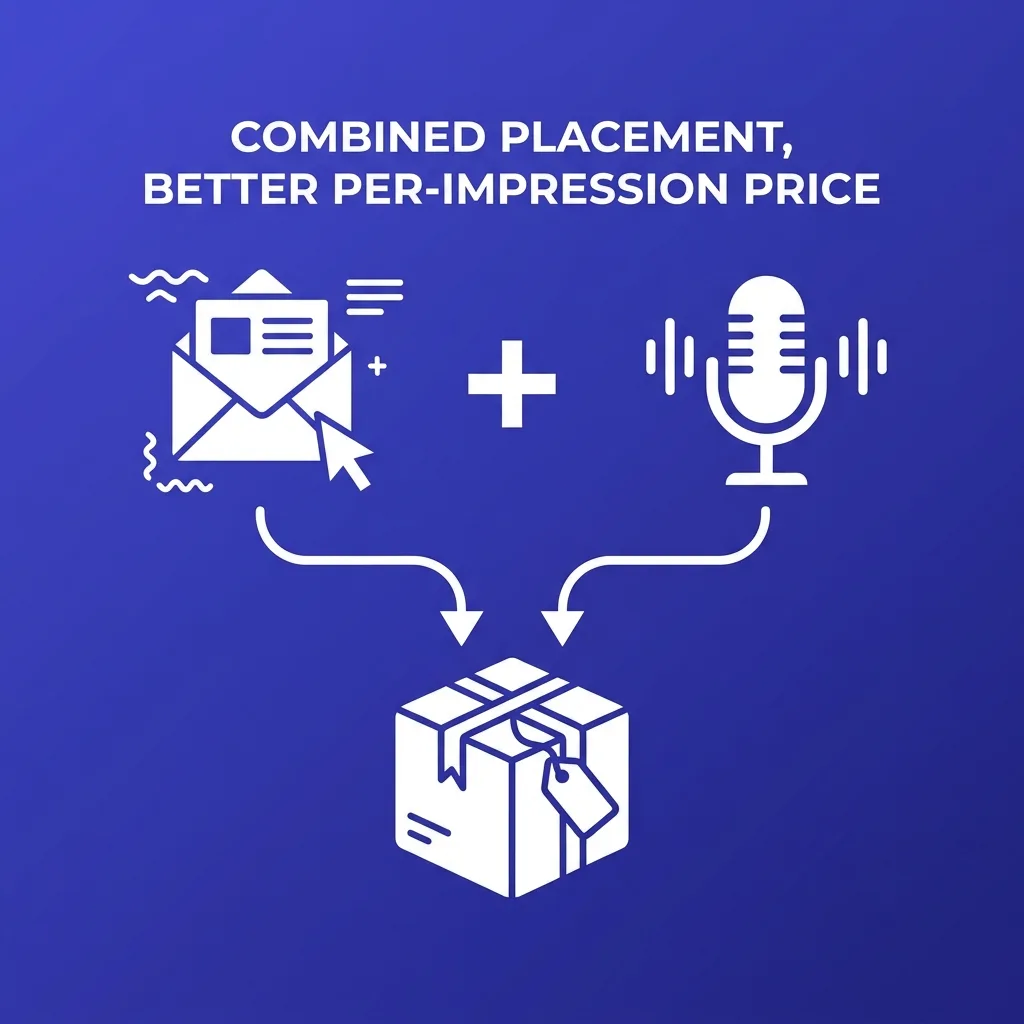
Many newsletter operators also host a podcast, and the two often share sponsorship inventory.
If you are pitching a collab, ask whether they bundle newsletter and podcast placements, because combined packages often price better per impression than buying each separately.
This is also where podcast guest pitching and sponsorship pitching diverge: a guest slot costs nothing but your time and expertise, while a sponsorship slot is a straight commercial transaction.
Do not conflate the two asks in one email.
Pitching a paid sponsorship and a free guest appearance in the same message reads as scattered, and most operators will only respond to whichever ask is clearer.
#Common mistakes that get creator pitches deleted
The pitch that opens with company background instead of a specific reference gets skimmed and skipped.
The pitch that asks "would you be interested in partnering?" without naming a format forces the creator to do your job for you.
The pitch sent to a personal email found through a scraper, when the media kit clearly lists a sponsorship inbox, signals you did not actually check.
The pitch that name-drops the wrong newsletter, a copy-paste error from a mail merge, ends the conversation instantly.
The pitch that ignores stated ad policies (some creators explicitly refuse crypto, gambling, or certain verticals) wastes both parties' time.
Reddit cold email advice threads are full of creators venting about exactly these patterns, and the complaints are remarkably consistent across niches.
#Follow-up cadence for creator collabs
One follow-up after four to five business days is standard, not aggressive.
Creators often batch sponsorship replies once a week rather than daily, so a single nudge with a new angle (a different format idea, a tighter budget number) is reasonable.
A second follow-up two weeks later, only if the first got any engagement (an open, a short reply asking for more info), is fine.
Beyond that, move on.
Follow-up email strategy for B2B prospects generally supports more touches than creator outreach does, because creators are individuals managing their own inbox, not a company with a CRM tracking every touch.
#Tools and workflow for scaling creator outreach
Running creator outreach at any real volume means the same infrastructure problems as B2B cold email: list building, personalization at scale, and reply tracking.
Platforms built for AI-assisted outbound, like FirstSales, can research a creator's recent content and draft a first pass at a personalized pitch, which a human then reviews before sending.
That matters more here than almost anywhere else, because a pitch that reads as templated in creator outreach is worse than sending nothing at all.
The AI drafts, a person checks the specific reference is actually accurate, and only then does it go out.
Human in the loop cold email is not optional in this niche. It is the entire point.
#Measuring ROI on a creator collab
A sponsorship without a tracking link is a sponsorship you cannot evaluate.
Set up a unique UTM link or promo code for every placement before it goes live, not after.
Track three numbers: click-through rate on the link, conversion rate on that traffic, and cost per acquired customer compared to your other channels.
A newsletter placement that costs $800 and drives 12 qualified signups, with three converting to paying customers, has a clear cost per customer you can compare against paid search or LinkedIn ads.
Most first-time sponsors skip this step and end up guessing whether the spend worked, which makes it impossible to justify a repeat booking.
Sales funnel metrics apply the same way here as they do to any paid channel. If you cannot measure it, you cannot defend the budget next quarter.
Give it two to three placements with the same creator before judging performance, since a single newsletter send is a small sample size and results vary issue to issue.
#Disclosure rules and FTC considerations
Sponsored content in a newsletter or podcast falls under FTC endorsement guidelines in the United States, and creators are required to disclose paid placements clearly.
Most established creators already handle this correctly, labeling sponsored sections with "sponsored," "presented by," or similar language.
If a creator you are pitching does not mention disclosure at all, raise it directly rather than assuming it is handled, since your brand carries reputational risk alongside theirs if a placement runs undisclosed.
This is not a reason to avoid creator partnerships. It is a five-minute conversation that protects both sides.
#Cold outreach versus warm introduction for creator deals
Warm introductions convert faster, but they do not scale, and most B2B teams pitching creator collabs do not have a warm path to every relevant newsletter in their niche.
Cold outreach to creators works when the pitch demonstrates real research, in the same way signal-based cold email outperforms generic list blasts in B2B sales.
The mechanism is identical even though the audience is different: specificity substitutes for the trust a warm intro would otherwise provide.
A founder with no existing relationship to a niche operations newsletter can still book a sponsorship by referencing three recent issues accurately and proposing a format that fits the creator's existing sponsor pattern.
That said, if you do have a warm path, mentioning the mutual connection in your first line shortens the researched-pitch requirement somewhat, though it does not eliminate it.
#What a rejected pitch teaches you
 What a rejected pitch teaches you
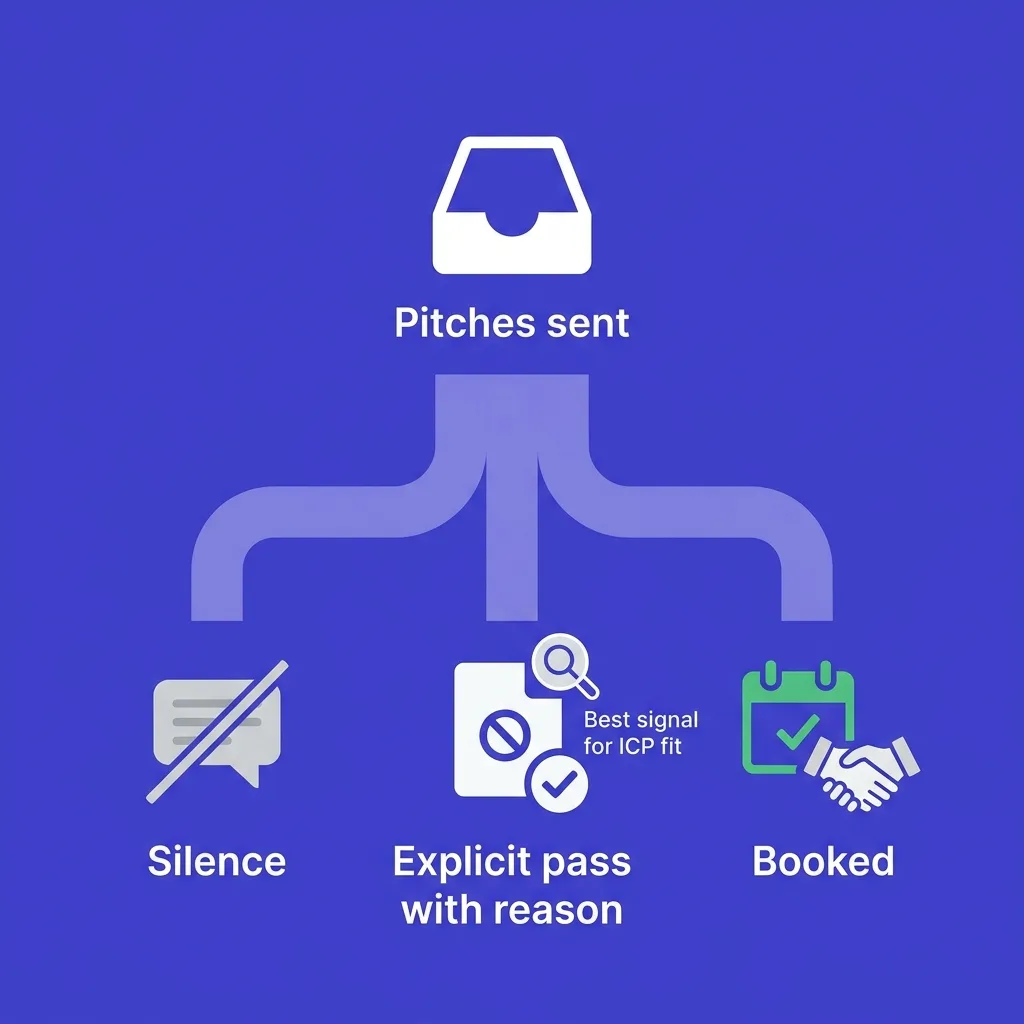
Most creator pitches get no response at all, and a smaller number get an explicit pass.
An explicit pass with a reason ("we're booked through Q1" or "not a fit for our audience right now") is more useful than silence, because it tells you whether the issue was timing, budget, or fit.
Track these responses the same way a sales team tracks lost-deal reasons.
If three consecutive creators in the same niche say your offer does not fit their audience, that is a signal about your ICP match, not about your pitch quality.
Custom pain points research done for cold email prospects applies just as directly to creator audience research: understand who actually reads the newsletter before assuming your product fits.
#Scaling from one creator to a real program
A single sponsored newsletter placement is a test, not a strategy.
Once you have data from two or three placements, build a shortlist of 15 to 20 newsletters in your niche, ranked by audience fit rather than raw subscriber count.
Batch outreach across that list, but resist the urge to template the pitch heavily, since the entire value of the approach depends on the specific reference in each email.
A practical workflow: research five creators a day, send five pitches a day, and track responses in a simple spreadsheet with columns for subscriber count, past sponsors, budget quoted, and outcome.
Within a month you will have a working sense of your niche's price range and which formats convert best for your offer.
Some teams then build a repeatable quarterly cadence, rotating through a rotating list of 8 to 10 newsletters that consistently perform, supplementing with new tests each quarter.
This mirrors how outbound cadence by deal size works in B2B sales: a repeatable system beats a one-off campaign every time.
#When a collab is not a paid sponsorship
Not every creator partnership involves money changing hands.
Co-written pieces, where both parties contribute content and cross-promote to their respective audiences, work well when the audiences are complementary rather than overlapping.
Swap promotions, where you mention their newsletter to your list and they mention yours to theirs, fit two lists of comparable size and similar topic relevance.
Interview or Q&A formats, where you answer questions for their newsletter in exchange for a byline and link back, cost time rather than budget and can be pitched even to creators who never take paid placements.
Each of these still needs the same research discipline as a paid pitch. A vague "want to collab?" email gets ignored regardless of whether money is involved.
#Building the pitch into a repeatable process
Teams that succeed at creator outreach treat it as a defined process, not an occasional favor someone in marketing does between other tasks.
Assign one person ownership of the newsletter and creator channel specifically, separate from whoever owns paid ads or B2B cold email.
Keep a living tracker of every creator contacted, the reference used, the outcome, and the price quoted, so future pitches do not repeat research that already exists.
Review performance quarterly against the same metrics you would apply to any paid channel: cost per lead, cost per customer, and payback period.
Cold outbound tech stack discussions usually focus on B2B prospecting tools, but the same discipline around process and tracking applies directly to creator sponsorship outreach, even though the tools differ.
#Red flags before you send
A few checks catch most failed pitches before they go out.
If you cannot name one specific thing from the creator's last three issues, you are not ready to send yet.
If your budget range is not stated anywhere in the email, expect the reply, if any, to just ask for it, adding a full round trip before the real conversation starts.
If the ask is unclear between "sponsor a send," "guest on the podcast," and "just wanted to connect," pick one and lead with it.
If the newsletter has an explicit sponsorship page listing categories they do not accept and your product falls into one, do not send the pitch at all.
If you are sending the same email to 50 creators with only the name swapped, stop and cut the list to the 15 that actually fit, then research each one properly.
These checks take five extra minutes per pitch and cut the deleted-without-reply rate substantially, based on the response-rate gap Podchaser's 2026 data shows between generic and targeted outreach.
#Data table: sponsorship pitch approaches compared
| Approach | Response likelihood | Best for | Risk |
|---|---|---|---|
| ✓ Named issue reference + clear budget | High | First outreach to any creator | None significant |
| ✓ Bundled newsletter + podcast ask | Medium-high | Creators who run both formats | Requires more research time |
| ✗ Generic "love your content" opener | Low | Nothing | Reads as templated, gets deleted |
| ✗ Product trade offer to established creator | Very low | Early-stage micro-creators only | Signals budget is not serious |
| ✓ Direct reference to past sponsor placement | High | Creators with visible sponsor history | Requires reading past issues |
| ✗ Scraped personal email instead of sponsor inbox | Low | Nothing | Signals no research was done |
| ✓ Specific format request (dedicated send, classifieds) | Medium-high | Any budget tier | None significant |
#FAQs
#How much does a newsletter sponsorship cost in 2026?
B2B and thought leadership newsletters typically charge $40 to $120 CPM for dedicated sends, though smaller niche newsletters with under 10,000 subscribers often price flat fees between $200 and $1,500 per placement depending on engagement and topic fit.
#What is the best way to find a creator's sponsorship rate?
Check for a public media kit linked in the newsletter footer or "advertise" page, and if none exists, ask directly in your first email rather than guessing at a number.
#Should I pitch a creator by email or DM?
Email is standard for sponsorship pitches because most creators run their business through a sponsorship inbox, while DMs work better for casual collab ideas or guest appearance asks with smaller creators.
#How many newsletters should I pitch before expecting a booked collab?
Expect to pitch 15 to 25 well-researched newsletters to book two or three collaborations, since fit and budget alignment eliminate most candidates even with a strong pitch.
#What makes a creator pitch feel like spam?
A generic opener with no specific reference to the creator's actual content, combined with a vague ask and no budget mentioned, are the two clearest spam signals creators report.
#Is it worth pitching creators with under 5,000 subscribers?
Yes, if the audience matches your ICP tightly, since niche B2B newsletters with small but highly relevant lists frequently outperform larger general-interest lists for qualified leads.
#How do I know if a creator accepts sponsorships at all?
Look for past sponsor mentions in recent issues, a media kit page, or an explicit "sponsor" or "advertise" link, and if none of those exist, a short polite inquiry email is fine before assuming they do not.
#What is a fair follow-up cadence for creator outreach?
One follow-up after four to five business days, and a second only if there was any prior engagement, then move on if there is still no response.
#Can I offer equity or revenue share instead of cash?
Only to early-stage creators actively building an audience, and even then, be explicit that it is a trade rather than framing it as equivalent to cash, since most established creators will decline non-cash offers outright.
#How long before a collab actually goes live after a creator says yes?
Most newsletter sponsorship slots book two to six weeks out depending on the creator's publishing calendar, so build lead time into any campaign timeline tied to a launch date.
#What should the subject line say for a sponsorship pitch?
State the intent plainly, such as "Sponsorship inquiry: [your company] x [newsletter name]," since creators specifically watch for sponsorship-related subject lines when triaging their inbox.
#Do creators prefer a fixed fee or performance-based deal?
Most established creators prefer a fixed fee for a first collaboration and will only discuss performance-based revenue share once a working relationship and baseline conversion data exist.
#How specific should the content reference be in my pitch?
Name the exact issue, date, and one detail from it, since a vague reference like "your recent content" reads identically to no reference at all.
#Should I mention competitor sponsorships in my pitch?
Only if it is genuinely relevant context, such as noting your product fills a different niche than a prior sponsor, and never in a way that reads as trying to bump a current advertiser.
#What if the creator counters with a higher price than my budget?
Ask about smaller formats first (a classifieds line, a shorter mention) before walking away, since most creators have flexible tiers even if their headline rate is fixed.
#Is AI-drafted outreach acceptable for creator pitches?
AI can speed up research and drafting, but every pitch needs a human review pass to confirm the specific reference is accurate, since an AI hallucinating a detail about the creator's content will end the conversation instantly.
#How do podcast sponsorships differ from newsletter sponsorships in pricing?
Podcast pre-roll and mid-roll spots typically price per thousand downloads similarly to newsletter CPMs, but production lead time is usually longer since episodes are recorded and edited before airing.
#What should I avoid mentioning in a first pitch email?
Avoid company mission statements, funding announcements, and generic value propositions, since none of that helps the creator decide whether the audience fit and budget work.
#Can small businesses realistically afford newsletter sponsorships?
Yes, niche newsletters with under 10,000 subscribers often have flat fees under $500, making them accessible for smaller marketing budgets targeting a specific professional audience.
#What is the single biggest factor in getting a reply from a creator?
Proof you actually read their work, demonstrated through one specific, accurate, recent reference, outweighs subject line tricks, formatting, or send timing by a wide margin.
#Timing your outreach around the creator's calendar
Newsletter operators plan sponsorship inventory in blocks, often a full quarter at a time.
Reaching out four to six weeks before your target launch date gives you a real shot at their preferred slots, while a two-week window before you need the placement live usually means settling for whatever is open.
Q4 and January are typically the most booked periods for B2B newsletters, since many sponsors chase Q4 budget-flush outbound spend at the same time.
If your campaign timeline is flexible, ask the creator directly which months tend to have more open inventory, since off-peak slots sometimes come with better pricing.
Building this lead time into your planning avoids the common trap of emailing five newsletters the week before a launch and getting five polite declines because everything is already booked.
#Key takeaways
Creator and newsletter collab outreach rewards research over volume.
One accurate, specific reference to a creator's actual work outperforms a dozen generic sponsorship blasts.
Price the ask clearly, name the format, and give the creator everything needed to say yes in five sentences or less.
Skip the mission statement. Skip the vague partnership language.
Pitch like someone who actually reads the newsletter, because that is exactly what gets a reply, and it is the one thing a template can never fake convincingly.